
Ankle pumps
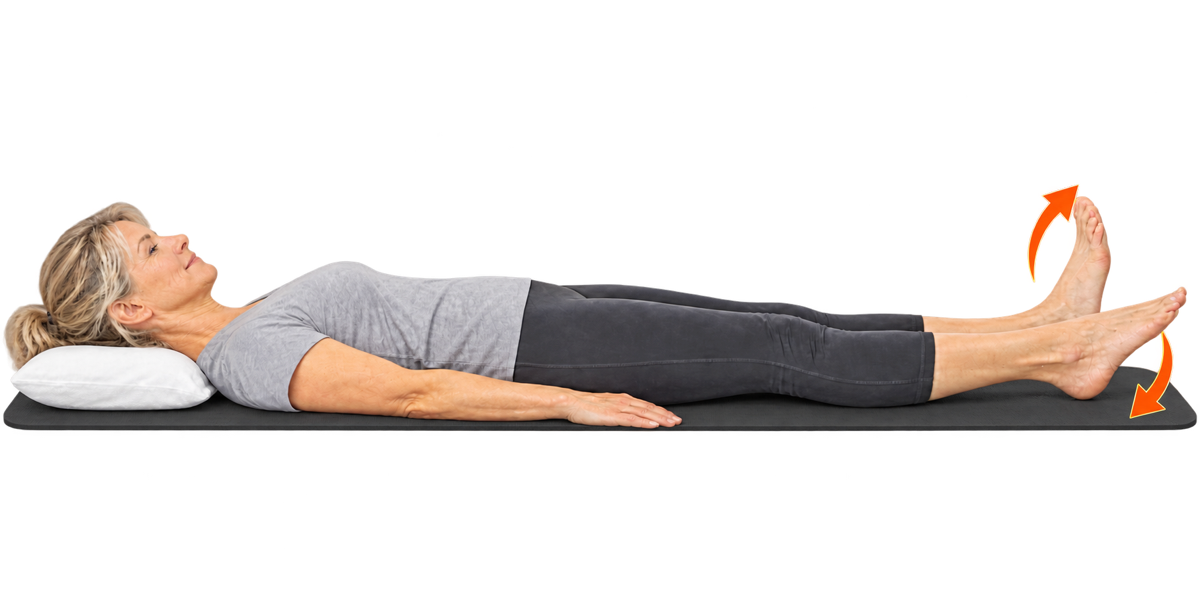
With your leg straight, bring your toes towards your head, then point your toes away from you. Alternate between these movements.
- Repeat
- 20 times/hour
- Frequency
- Frequently throughout the day
Rehabilitation starts with steady, intentional, and balanced movement.
You do not need a perfect recovery day. You need a steady one.
Rest counts. Short walks count.
The day after surgery, you may begin brief walks every hour with your walker, indoors. Limit these walks to 5–10 minutes. If using a device to track your steps, aim between 500–1,000 steps/day. Walking more than this can run the risk of delaying your healing.
Total hip replacement
Six early movements to support circulation, muscle activation, mobility, and a steady return to walking.
With your leg straight, bring your toes towards your head, then point your toes away from you. Alternate between these movements.
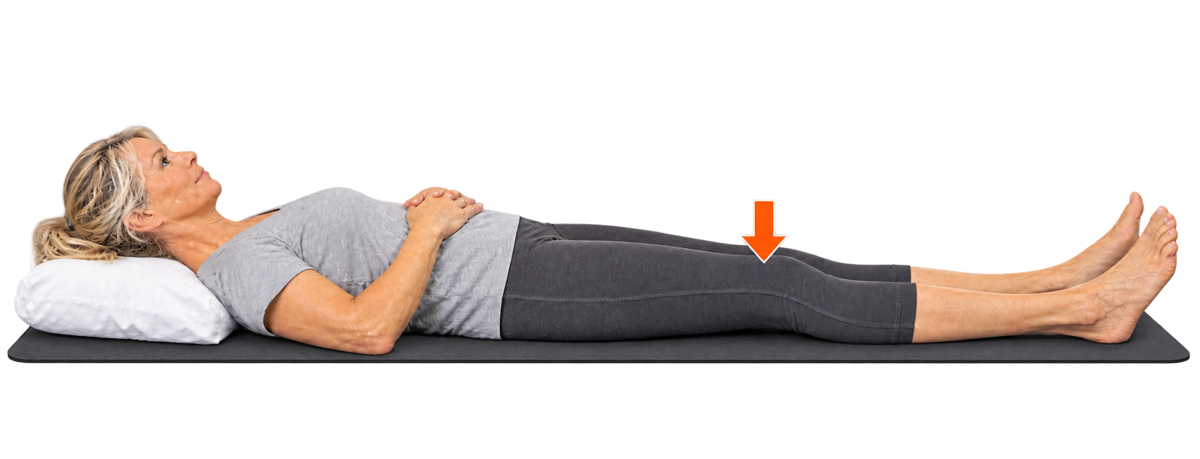
With your leg straight, tighten the front of your thigh muscle. Your knee should press down on the bed with your heel lifting slightly. Make sure your knee fully straightens during this.
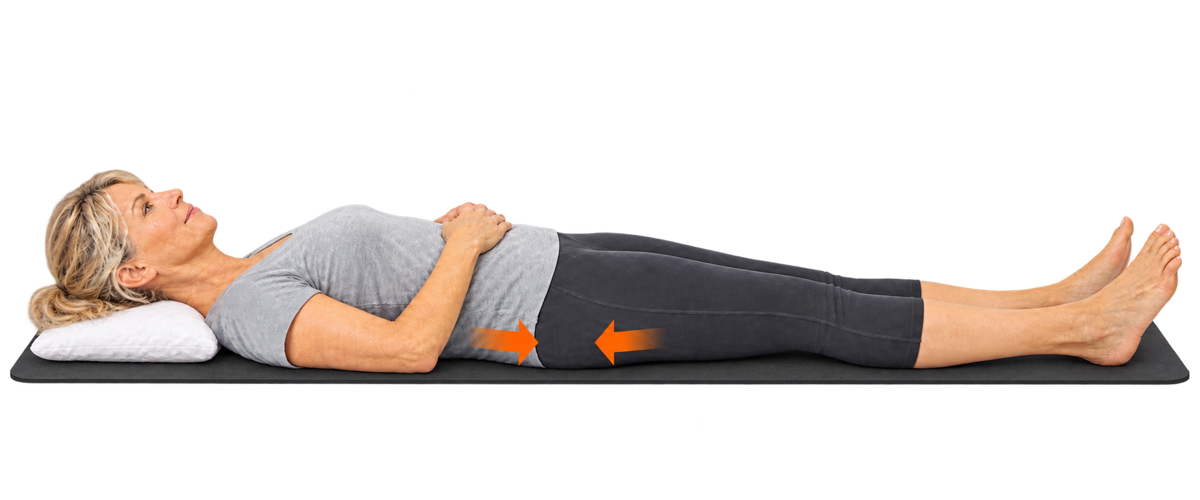
Lying on your back or sitting up, squeeze your buttocks and hold. You can make sure that you are firing your glutes by sitting on your hand and monitoring that the muscle is contracting.
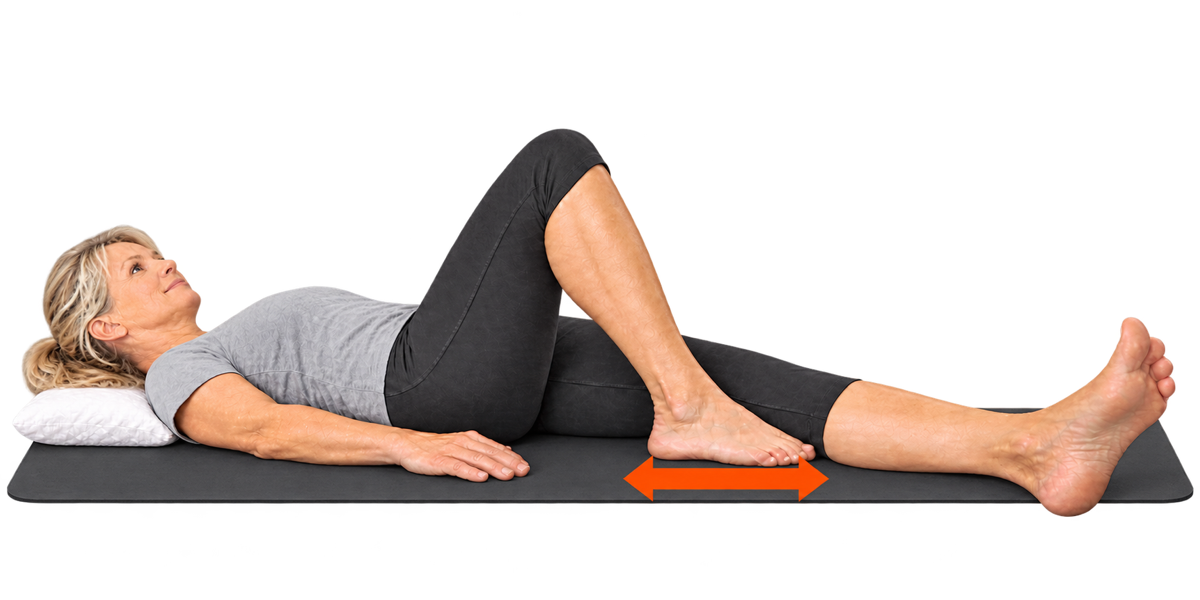
Lie on your back and pull your heel towards your bottom as you bend your knee. Hold for a few seconds, then straighten your leg back out to the starting position.
You can use a cookie sheet under the heel to help with sliding the foot.
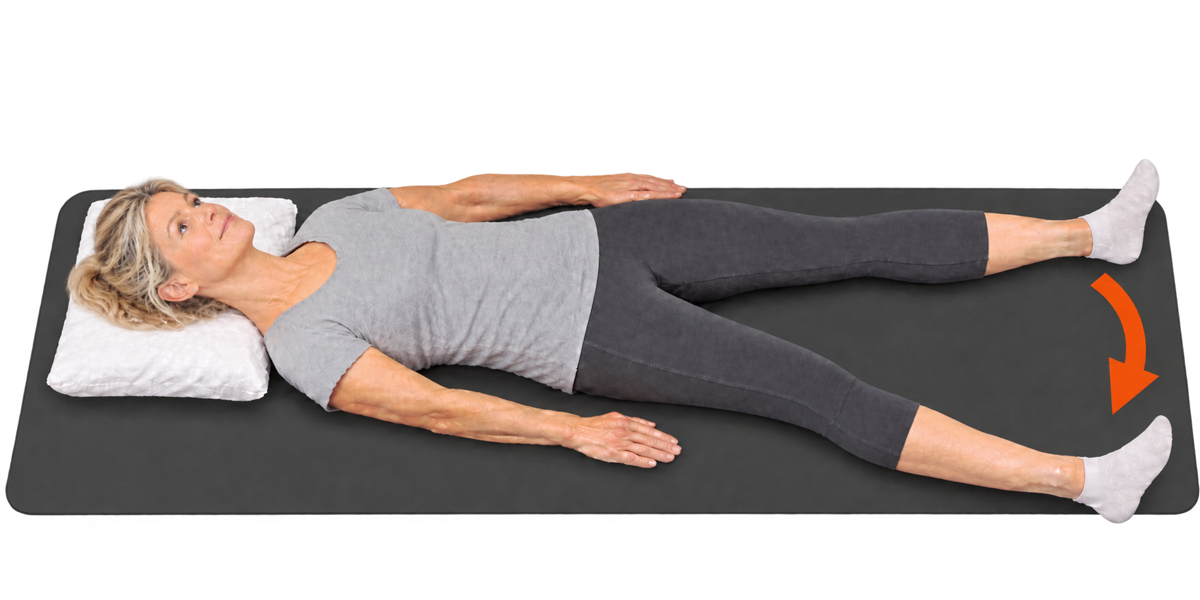
Lie on your back as you slide your entire leg out to the side while it is straight. Keep your toes pointed toward the ceiling and don’t let the leg fall off the side of the bed. Slowly bring your leg back to the center.
You can use a cookie sheet under the heel to help with sliding the foot.
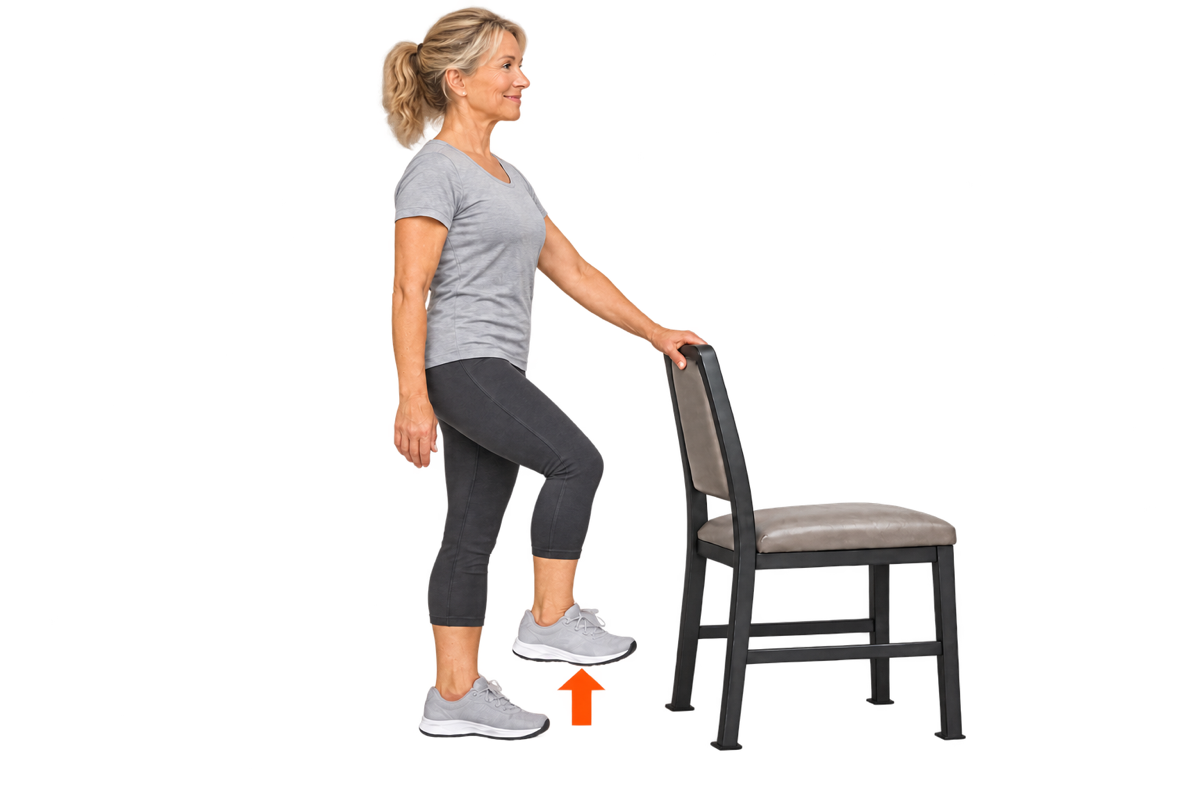
Stand tall while holding onto your walker or a sturdy surface, then lift one foot off the floor 3–5 inches.
Try to hold the foot in the air for 2–3 seconds before slowly lowering it back down. Repeat, alternating on each side.
Total knee replacement
Six early movements to support circulation, knee motion, muscle activation, and safe walking after surgery.
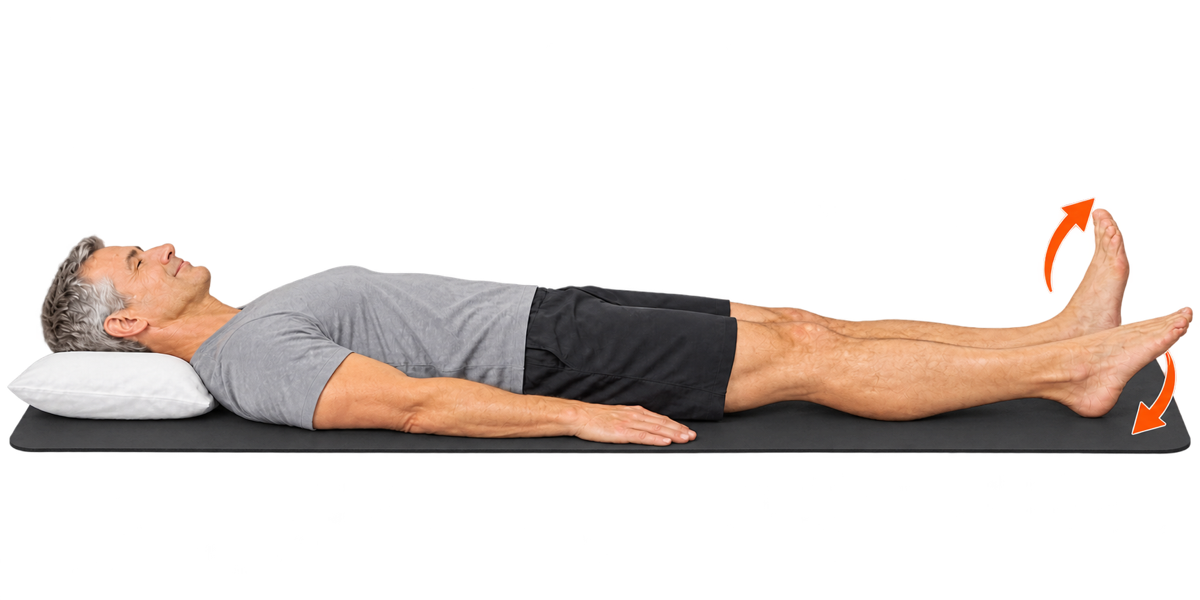
With your leg straight, bring your toes towards your head, then point your toes away from you. Alternate between these movements.
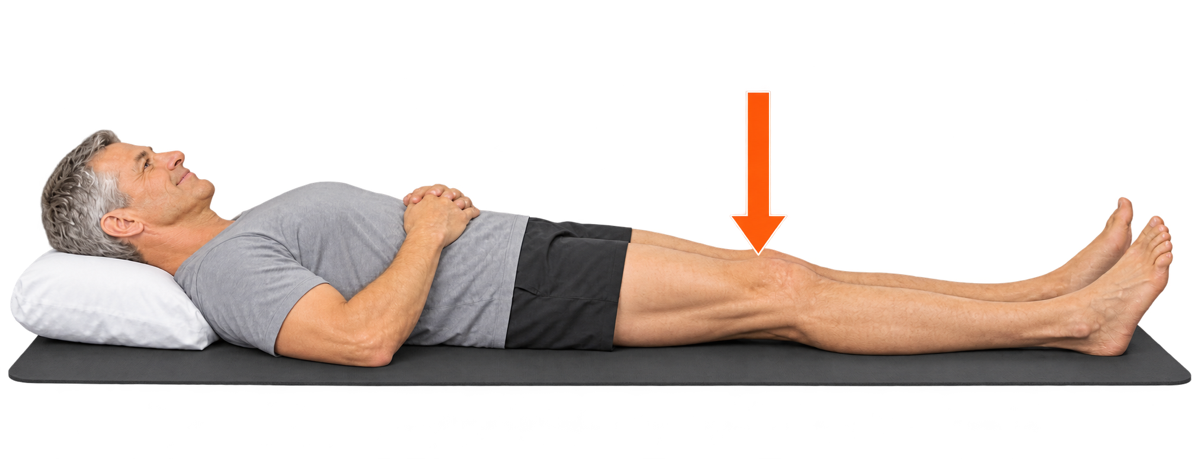
With your leg straight, tighten the front of your thigh muscle. Your knee should press down on the bed with your heel lifting slightly. Make sure your knee fully straightens during this.
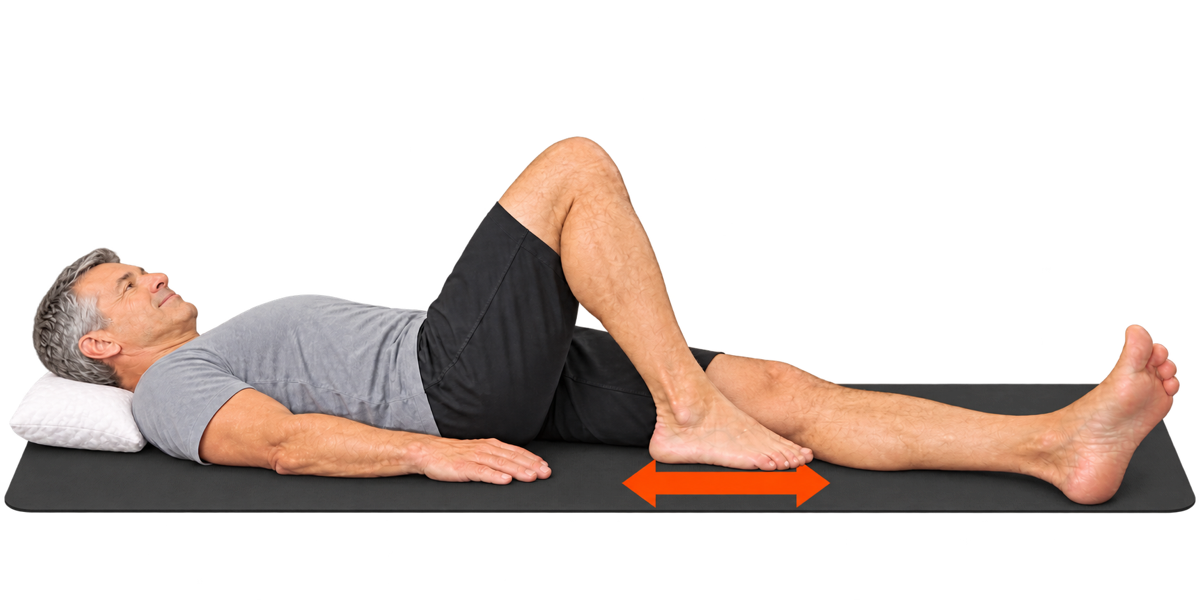
Lying on your back or seated in a chair, pull your heel back to bend your knee within tolerable pain levels.
Hold for a few seconds then straighten your leg back out.
Use a cookie sheet under the heel to help with sliding the foot.
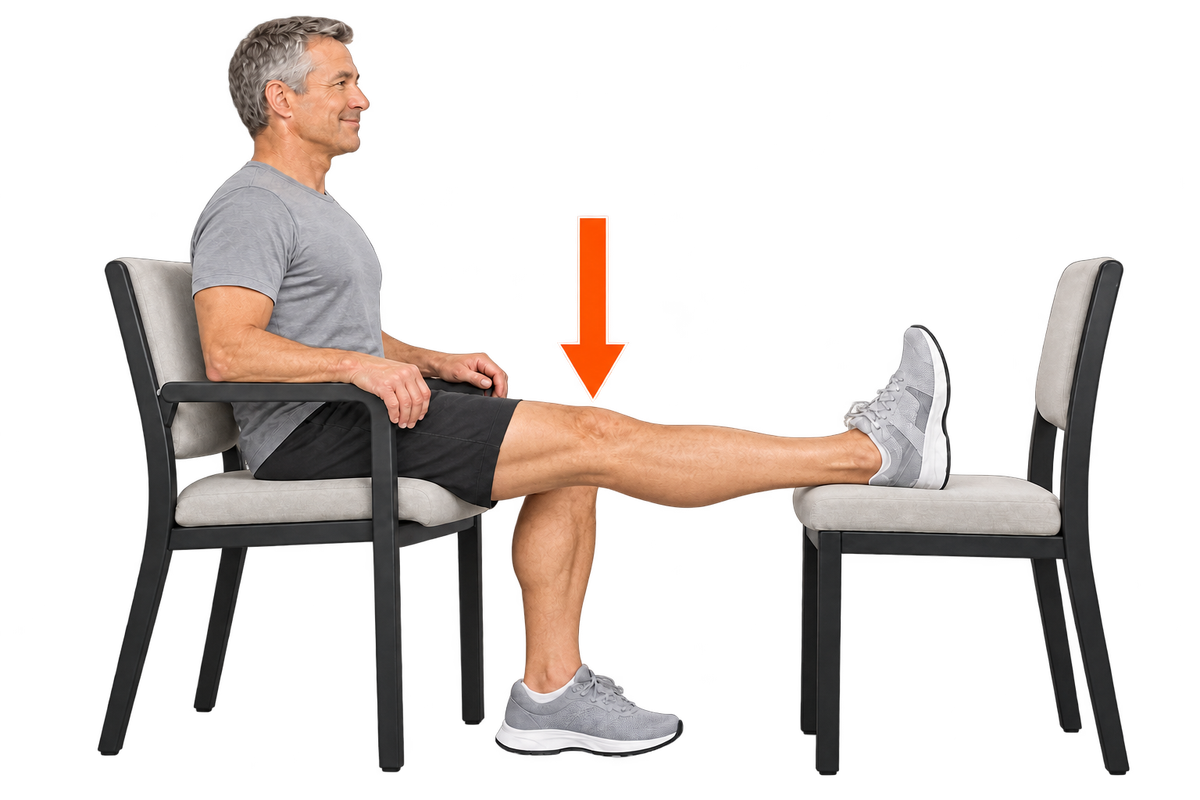
Sit with your operated heel propped on a chair, pillows or a coffee table.
Keep your knee straight as you sit up tall or lean slightly forward for an added stretch.
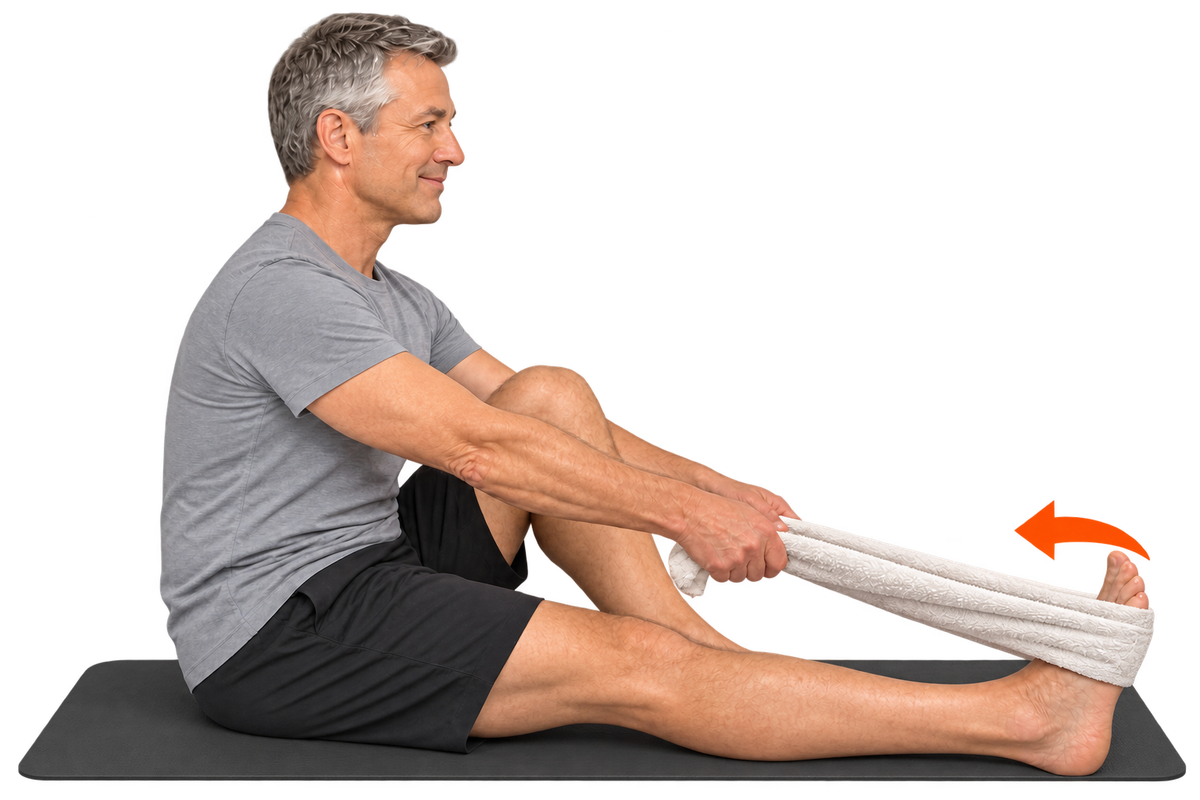
While in a seated position, hook a towel or belt under the ball of your foot and pull back until a stretch is felt in your calf area.
Keep your knee in a straightened position throughout the stretch.
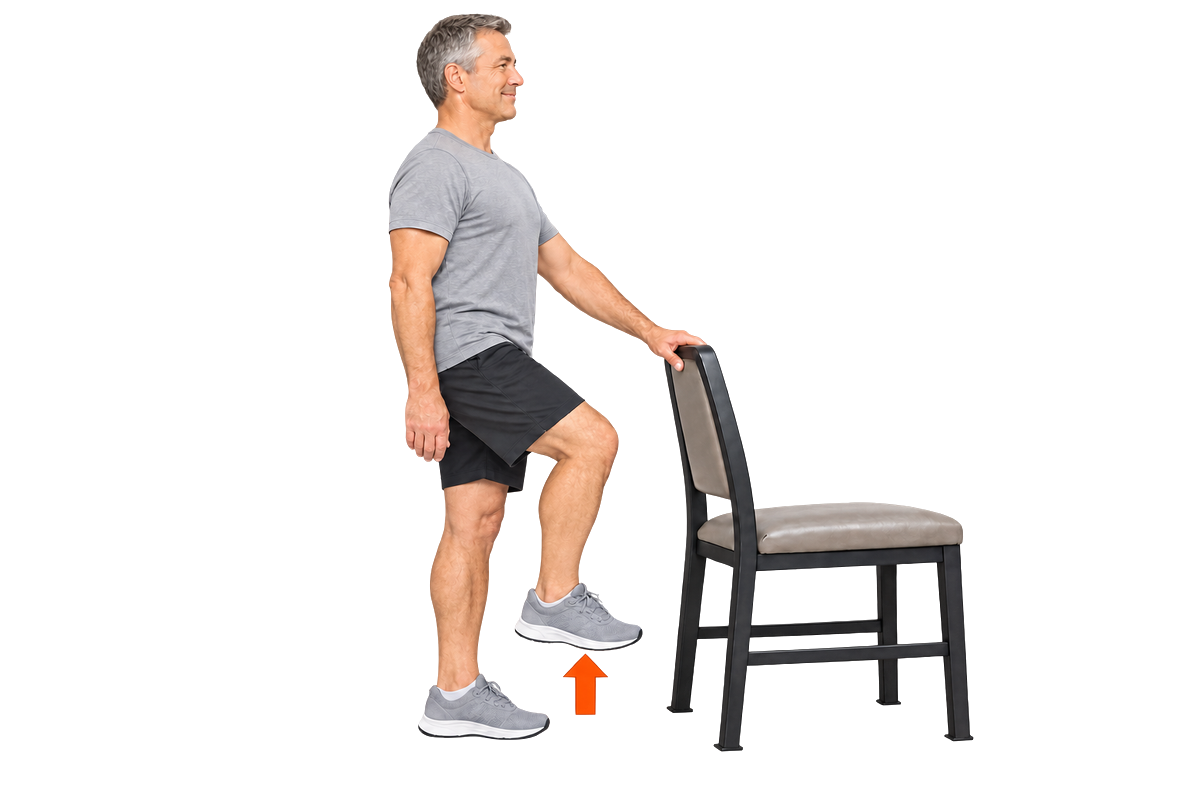
Stand tall while holding onto your walker or a sturdy surface, then lift one foot off the floor 3–5 inches.
Try to hold the foot in the air for 2–3 seconds before slowly lowering it back down. Repeat, alternating on each side.
These exercises are general post-operative guidance. Follow the instructions from your surgical and physical therapy teams when they differ. If you are unsure whether an exercise is appropriate or how to perform it, contact your surgical or physical therapy team before continuing.